In digital marketing, it’s easy to fall into one of two camps.
You either get lost in the creative, chasing big ideas that look great but don’t drive results… Or you get stuck in the data, optimising everything into safe, predictable content that no one remembers.
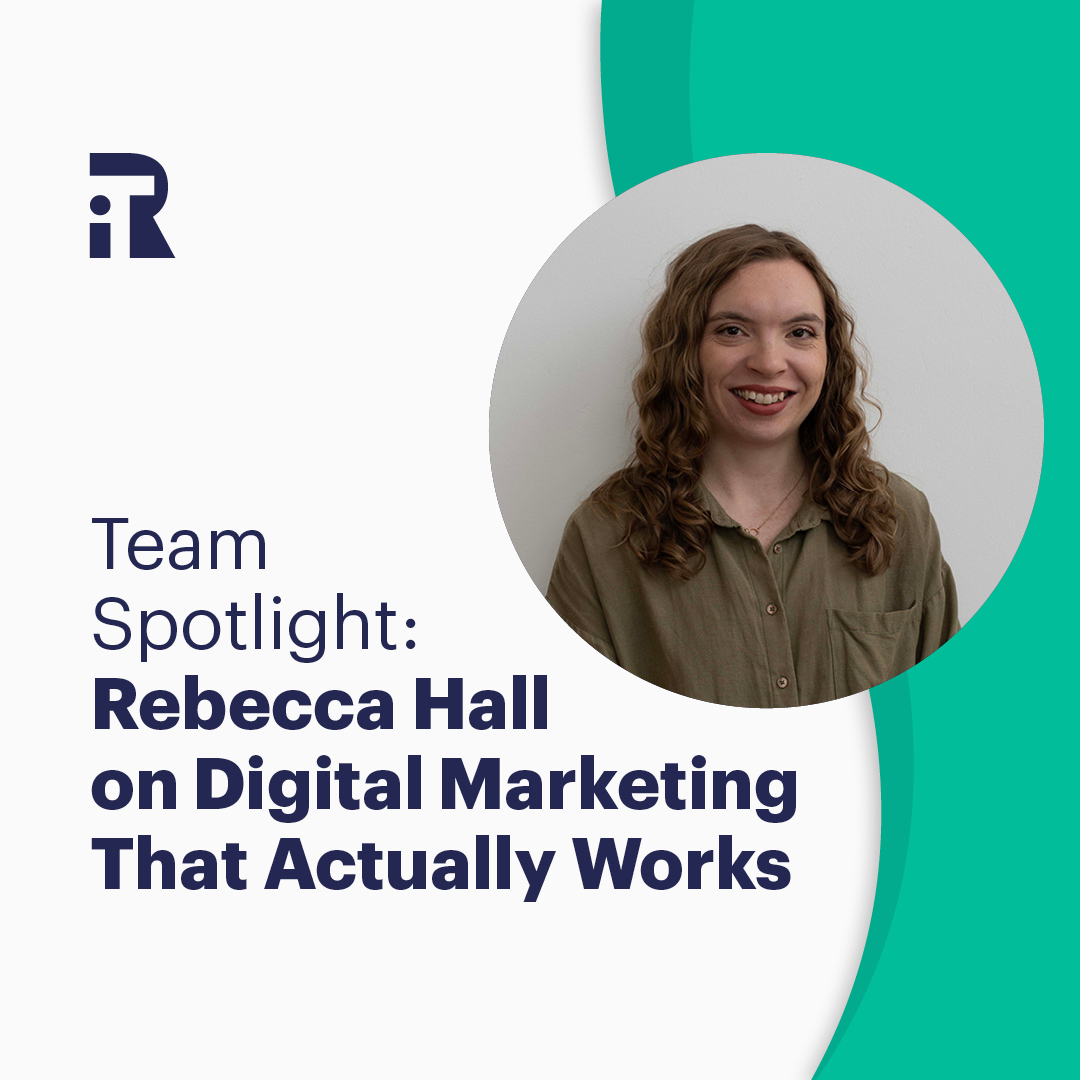
Rebecca Hall, Senior Digital Marketing Manager at ResourceiT, sits right in the sweet spot between the two.
With 9 years of experience building campaigns in fast-moving environments, Rebecca brings a rare mix of creativity, analytical thinking, and calm clarity. She’s the kind of marketer who can talk about performance, messaging, and audience intent in one breath, then casually drop a line that makes you rethink how you approach marketing altogether.
We sat down with Rebecca to talk about what “exceptional marketing” really looks like, how she uses AI in a way that makes campaigns better (not just faster), and why the future of digital might actually be… more human.
Exceptional digital marketing isn’t just attention. It’s action.
Ask any marketer what they want and you’ll get the same answer: engagement.
But Rebecca’s definition of exceptional marketing goes further than clicks, impressions, or even lead volume.
“Exceptional marketing is when it connects with the right audience at the right time and drives real action.”
For Rebecca, the best campaigns don’t just perform inside a dashboard. They create outcomes you can feel.
They influence conversations.
They shift perception.
They make people take the next step, even when you’re not in the room.
“A campaign has truly landed when the outcomes go beyond our immediate touchpoints and show that our efforts are delivering real, tangible results.”
That’s the difference between marketing that looks good… and marketing that actually moves the needle.

Creativity gets people to care. Data tells you what matters.
If you work in channel marketing (or any B2B environment where attention is hard-won), you know the pressure:
Be original.
Be relevant.
Be measurable.
Be fast.
Rebecca’s approach is refreshingly grounded.
“Both creativity and data are essential. Data tells you who you’re talking to and what matters to them, whilst creativity shows how to make them care.”
This is where strong campaigns are made. Not by choosing between creative and performance, but by using both in the right order.
You start with the big idea. Then you shape it with insight.
“You start with a big creative idea, and then use data to inform the approach, measure, test and refine, finding the balance between originality and good performance.”
It’s a mindset that ResourceiT clients benefit from massively, especially in crowded ecosystems where every brand is competing for the same audience’s time.
The biggest shift in marketing? The speed of attention.
The last few years haven’t just changed digital marketing. They’ve changed how people consume everything.
Rebecca describes it simply:
“The speed and amount of content we consume has changed massively… our attention spans have shrunk and scrolling has become faster.”
And she’s right. Even content formats that used to feel short now feel long.
“Even a 30-second promo video can sometimes feel too long!”
So how do you respond to that as a marketer? You don’t just shout louder.
You get more intentional.
“We try and focus on personalisation and reaching audiences through trusted targeted channels, like InMail’s and messages that feel one-to-one and more trustworthy.”
It’s a powerful reminder for anyone building campaigns in the Microsoft ecosystem: your audience doesn’t need more noise. They need relevance, trust, and timing.
AI doesn’t replace the marketer. It gives them their time back.
AI is everywhere right now, but Rebecca’s perspective is one of the most practical we’ve heard.
For her, the biggest value isn’t “AI writing everything for you”. It’s the way it reduces friction.
“It helps handle some repetitive and time-intensive tasks, freeing me up to tweak, refine messaging and focus on strategic problem-solving.”
In other words: less time on process, more time on campaigns.

The smartest use of AI? Challenging your thinking.
One of Rebecca’s most interesting insights is how she uses AI to improve campaign effectiveness, not just speed.
“AI helps me make smarter decisions. I use it as a sounding board to interrogate my own thinking… questioning my reasoning and helping me uncover the why.”
That’s a seriously mature way to use the technology.
Instead of outsourcing creativity, she uses AI to strengthen it. To pressure-test ideas. To deepen the thinking behind the work.
“It allows for deeper thinking overall leading to more successful campaigns.”
For marketers, especially those building multi-touch campaigns with partner audiences, this is the difference between output and impact.
The myth we need to stop repeating: AI replaces creativity.
Rebecca is clear on this one.
“That AI replaces creativity.”
Because it doesn’t.
The best campaigns don’t come from content generation. They come from insight, judgement, and knowing what will resonate with real humans.
“The best work happens when AI supports creative thinking, instead of replacing it, building on ideas rather than generating them in isolation.”
If you’re a marketing leader wondering how to integrate AI into your team, use it to elevate human thinking, not remove it.
When a campaign isn’t performing, go back to basics (and be patient)
Every marketer has been there.
The campaign is live.
The budget is running.
And the results are… not great.
Rebecca’s approach isn’t panic. It’s process.
“I take it back to basics. I systematically review each element to see what’s working and where improvements can be made.”
And importantly, she also reminds us of something we forget far too often:
“Sometimes the campaign is fresh, and you need to wait out its ‘learning phase’ before making any tweaks.”
That balance between action and patience is what separates reactive marketing from strategic marketing.
The trend she’s most excited about: “proof of life” marketing
In a world full of AI-generated content, templated messaging, and polished-but-empty brand output, trust is becoming the real differentiator.
That’s why Rebecca is excited about a trend that’s essentially the opposite of over-produced marketing.
“I’m excited about the ‘proof of life’ marketing which focuses on bringing trust back to brands by creating a genuine human connection.”
She describes it as a familiar cycle: when new technology comes along, audiences start looking for evidence that something is real.
“Photographers used to leave the negative borders on a final print to show they’d composed the shot in-camera.”
The modern version is marketing that feels unmistakably human.
More voice, more opinion, more authenticity.
More “this came from a real person who understands my world.”
For ResourceiT’s audience, especially in partner marketing, that’s a big deal. Because relationships are the currency of the channel.
Confidence doesn’t come from knowing everything. It comes from testing.
Rebecca’s advice for marketers wanting to build confidence is something every team needs to hear:
“Get comfortable testing boundaries.”
Because the truth is, none of us know everything. The platforms change. The audience shifts. The tactics evolve.
Confidence comes from doing the work anyway, then learning from it.
“Confidence doesn’t come from knowing everything, it comes from experimenting, reviewing results honestly, and improving each time.”
And perhaps most importantly:
“Learning to trust your instincts will take you far, because if something feels off with a campaign, it probably is.”
That instinct is often what protects brands from creating content that technically ticks the boxes, but doesn’t feel right.
Outside of marketing, Rebecca’s creativity comes from doing
When she’s not working, Rebecca loves exploring the outdoors, travelling, and jumping into creative projects.
And the way she describes it is exactly how creativity works in real life:
“Nature and new places helps me reset, notice details I’d normally miss and slow down my pace.”
But she’s also honest about the fact that inspiration doesn’t always arrive neatly.
Sometimes you have to start first.
“Sometimes the best thing you can do is just start something creative… the creativity comes from doing, figuring it out as you go and not overthinking.”
It’s a good reminder for marketers too. You don’t get better by waiting for the perfect idea. You get better by building, testing, and refining.

Next stop: Japan (and yes, the vending machines are a highlight)
Rebecca’s upcoming trip to Japan is top of her list, and her excitement is infectious.
“I can’t wait for all the food and all the weird and wonderful vending machines.”
She’s looking forward to the full contrast of the experience:
“Soaking up the atmosphere (and being totally overwhelmed by the big cities) and pairing that with some nice relaxing nature vibes.”
And like any great traveller…
“Fingers crossed for cherry blossoms!”
What she loves most about ResourceiT: the collaboration
Finally, we asked Rebecca what stands out most about working at ResourceiT.
Her answer captures the culture perfectly:
“The best thing about it is the collaboration. Everyone pulls together as a team sharing ideas and pushing boundaries to get the best outcomes for clients and progress as individuals.”
It’s not just about delivering campaigns. It’s about building better ones together, learning faster, and pushing the work forward as a team.
Want more content like this?
If you’re a partner marketer, digital lead, or growth team trying to drive results in a crowded ecosystem, ResourceiT is here to help you build campaigns that connect, convert, and create real momentum.
Let’s make marketing that lands.